


Have you looked at the “wheel of doom” while your favourite show buffers? Choosing between FTTP and FTTC feels like learning a new language, but the concept remains simple. Full fibre represents the newest generation of internet technology in the UK, offering ultra-fast speeds that legacy copper cables cannot deliver.
FTTP vs FTTC: What Do These Broadband Terms Mean?
Broadband jargon trips up even the most switched-on shoppers. FTTP, FTTC, full fibre, part fibre — these labels are still intimidating at first among many, but most comparison sites assume you already know the difference.
Here’s the straightforward version.
FTTC (Fibre to the Cabinet) connects a fibre optic cable from your local telephone exchange to your nearest local street cabinet. This system sends data via fast fibre optic cables to your local street cabinet, but traditional copper wires carry the signal to your front door. Copper slows down your data and suffers from interference.
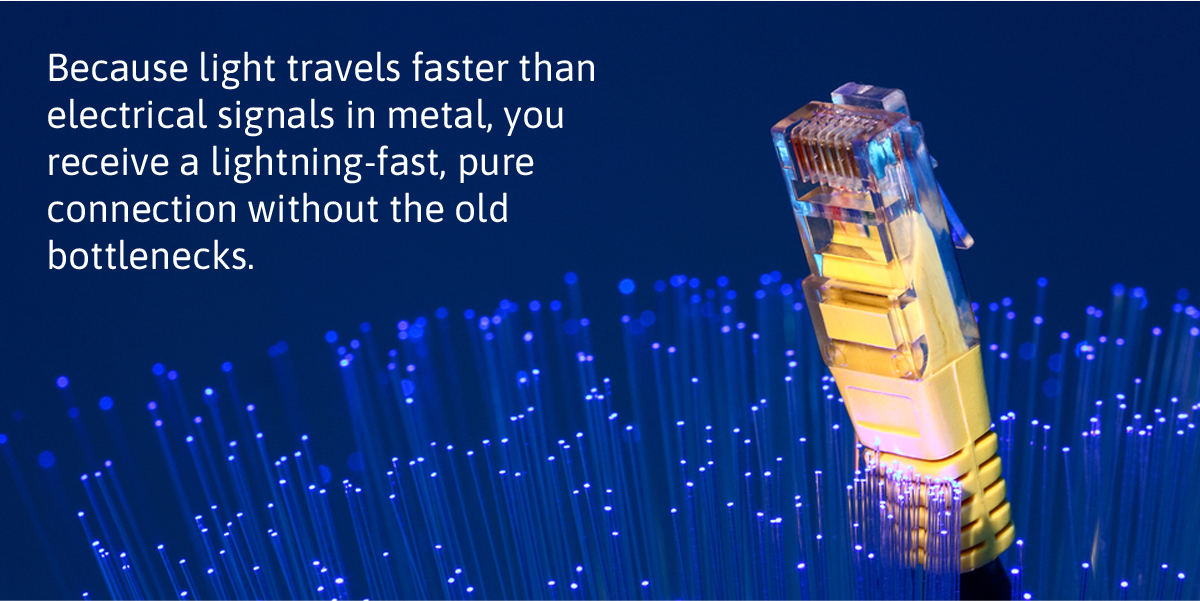
Full Fibre, or Fibre to the Premises (FTTP), replaces that old copper entirely. Fibre optic glass strands run directly into your home. Because light travels faster than electrical signals in metal, you receive a lightning-fast, pure connection without the old bottlenecks.
What Full Fibre Broadband Connection Delivers?
Full fibre broadband (FTTP) sends your internet data as light through hair-thin glass strands, direct to your home. No copper handles the connection at any point. Meaning you’ll be going to see a lot less buffering on your Streaming Device or any other systems, and no significant slowdown at busier times.
This all the way up speed is significant because light signals travel faster, carry more data, and are nearly zero-resistance interference, far better than electrical signals through copper. Rain, wind, electromagnetic interference from household appliances — none of these degrades a full fibre connection in the way, whereas copper-based broadband weakens speed because of long distances and is highly susceptible to interference.
According to Ofcom’s 2024 UK Home Broadband Performance report, full fibre connections deliver average download speeds of 223 Mbps, with packages reaching up to 1,000 Mbps (1 Gbps) and beyond.
Standard ADSL broadband averages around 11.7 Mbps, while part-fibre FTTC tops out at roughly 55.7 Mbps under typical conditions.
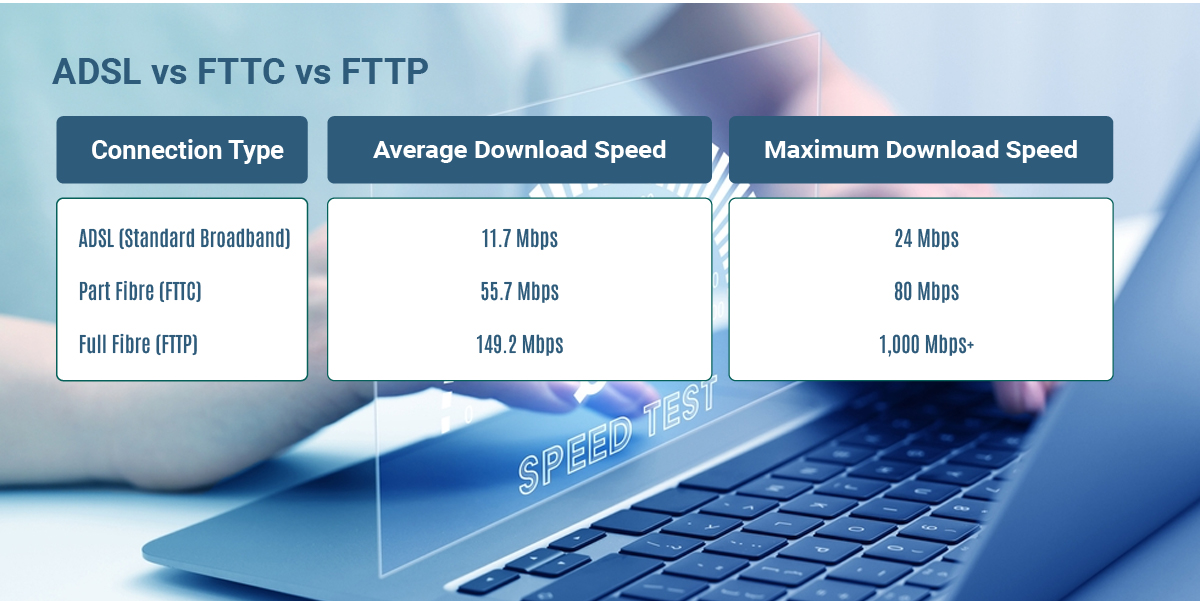
These numbers have unique value propositions: full fibre outperforms part-fibre connections by a factor of three on average — and speeds more than standard broadband by more than tenfold faster.
If you are considering upgrading your home fibre broadband or business full fibre broadband packages, Zoiko Broadband is here to help.
What Full Fibre Speed Benefits at Home?
Numbers on a spec sheet mean little without context. Here’s what full fibre broadband changes in your daily routine.
Super Smooth Streaming Without Buffering!
A single 4K Netflix stream requires around 25 Mbps of stable bandwidth. A household running three simultaneous 4K streams — one in the living room, one in the bedroom, one on a tablet — needs 75 Mbps before anyone opens a browser. FTTC connections often struggle under high load during peak evening hours. Full fibre handles it without significant speed loss, even on a 150 Mbps package.
Video Calls That Stay Sharp!
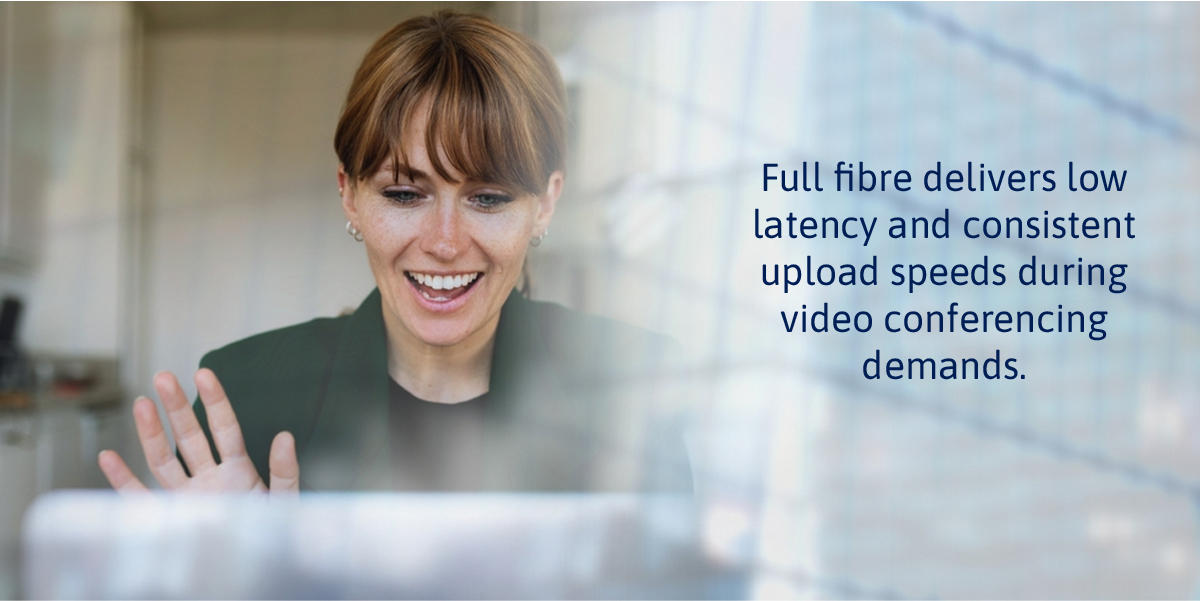
Remote workers know the frustration: your Zoom call freezes mid-sentence, your screen turns into a distorted pixel display, and your colleague asks, “Can you hear me?” Full fibre delivers low latency and consistent upload speeds during video conferencing demands. A Teams or Zoom call in HD needs around 3.8 Mbps upload — well within reach of FTTP’s symmetrical or near-symmetrical speed profiles.
Online Gaming Without Lag!
Online gaming depends on latency (ping) as much as raw speed. Full fibre connections produce lower, more stable ping times because data travels through glass at light speed regardless of weather and interference, thereby maintaining consistent speed over time. Your teenager can compete in Fortnite while you stream a podcast and your partner downloads a work presentation — all without anyone noticing a slowdown.
Downloads in Seconds!
A 50 GB game update on a 10 Mbps ADSL line takes over 11 hours. The same download on a 500 Mbps full fibre plan completes in roughly 13 minutes. Large file transfers, cloud backups, and software updates move from overnight chores to quick downloads.
Reliability: Why Full Fibre Connections Drop Out Less?
Speed grabs the headlines, but reliability separates full fibre from every older broadband technology.
Copper cables degrade over time. Moisture seeps into joints, causes oxidation and corrodes connections. Electromagnetic interference from nearby electronics is degrading signal quality. The farther your data travels over copper, the weaker it arrives.
Ofcom data confirms FTTC and ADSL users experience noticeably more connection dropouts than FTTP subscribers, particularly during wet weather and peak-time congestion.
Full fibre avoids every one of these vulnerabilities:
- Weather resistance — Glass fibres carry light, not electrical signals, so rain, frost, and temperature changes cause no signal degradation.
- No distance penalty — Signal strength remains constant whether your home is about 50 metres or 500 metres from the exchange point.
- No Electromagnetic Interference — Fibre optic cables have no electromagnetic noise from microwaves, baby monitors, and neighbouring electronics.
- Peak-time consistency — FTTP connections maintain near-advertised speeds even at 8 pm on a weekday, when the nation’s broadband demand peaks.
For households where a stable connection underpins daily work, education, and entertainment, this reliability advantage alone justifies the upgrade.
Speed and Performance Anytime!
Standard broadband often crawls along at 10–30 Mbps. Full fibre transforms this experience, delivering speeds up to 1,000 Mbps (1 Gbps).
This ensures the ability of users to receive ultra-fast speeds at which your household functions:
- Gaming: Download big 100GB titles in minutes rather than overnight.
- Streaming: Watch 4K Netflix in the living room while others stream YouTube in bedrooms without a single stutter.
- Working from Home: Upload large presentation decks or video files instantly while your video calls remain crystal clear.
- Making every video meeting crystal clear, even with multiple users.
Fewer Dropouts!
Copper wires act like antennas under certain conditions—they pick up interference from bad weather or nearby electrical devices. Fibre optic cables use pulses of light, making them resistant to any environmental “noise.”
You receive a consistent connection that does not drop when it rains or during the “evening peak hours” when everyone in your street goes online. According to Ofcom, full fibre users report significantly higher satisfaction due to this stability.
Who Needs a Full Fibre Upgrade?
While basic browsing works on older tech, certain users find FTTP essential:
- Remote Professionals: The UK’s hybrid working pattern won’t go in reverse. Stable video calls, fast cloud file access, and reliable VPN connections need business-grade internet speeds and network reliability to prevent embarrassing screen freezes during crucial client meetings.
- Hardcore Gamers: Lower “ping” (latency) provides a competitive speed by reducing the delay between your actions and the game server.
- Busy Households with Multiple Users: A family of four — each with a smartphone, a laptop, perhaps a tablet — can generate 10+ simultaneous connections before anyone consciously “uses the internet.” Smart speakers, smart TVs, AI-powered smart cameras, smart locks, connected thermostats, and streaming devices are all fighting for bandwidth. Full fibre distributes capacity across every device without forcing anyone to wait.
- Support Online Classroom: The UK’s “digital-first” education pattern shows no signs of reversing. Peer collaboration with stable video calls, fast cloud file uploads, one-on-one academic curriculum support and reliable screen share requires an ultra-fast, future-ready broadband connection and network reliability.
Choose Your Freedom of No-Cap Fibre Broadband Plans!
Data caps create “data anxiety,” forcing you to monitor every download. No-cap full fibre home broadband plans remove these invisible limits. You can stream, play online, watch live TV, and work as much as you like without worrying about extra charges or speed throttling. This “all-you-can-eat” approach ensures your bill stays predictable while your usage grows.
Upgrade Your Internet Connection with Zoiko Broadband!
Transitioning to a faster life should be simple. At Zoiko Broadband, we replace complex industry terms to provide straightforward, high-speed solutions for homes and businesses. We’re not only advocating fibre technology, but also focus on delivering the “freedom of switch” to full fibre broadband plans so you can stop thinking about your router upgrades and start enjoying the advertised speeds anytime.
Ready to leave the frustrating buffering behind? Explore our latest full fibre broadband plans or call our friendly UK-based team at +44 (0)207 164 6399 to check availability in your area.
We make the switch easy, stress-free, and worth every penny.